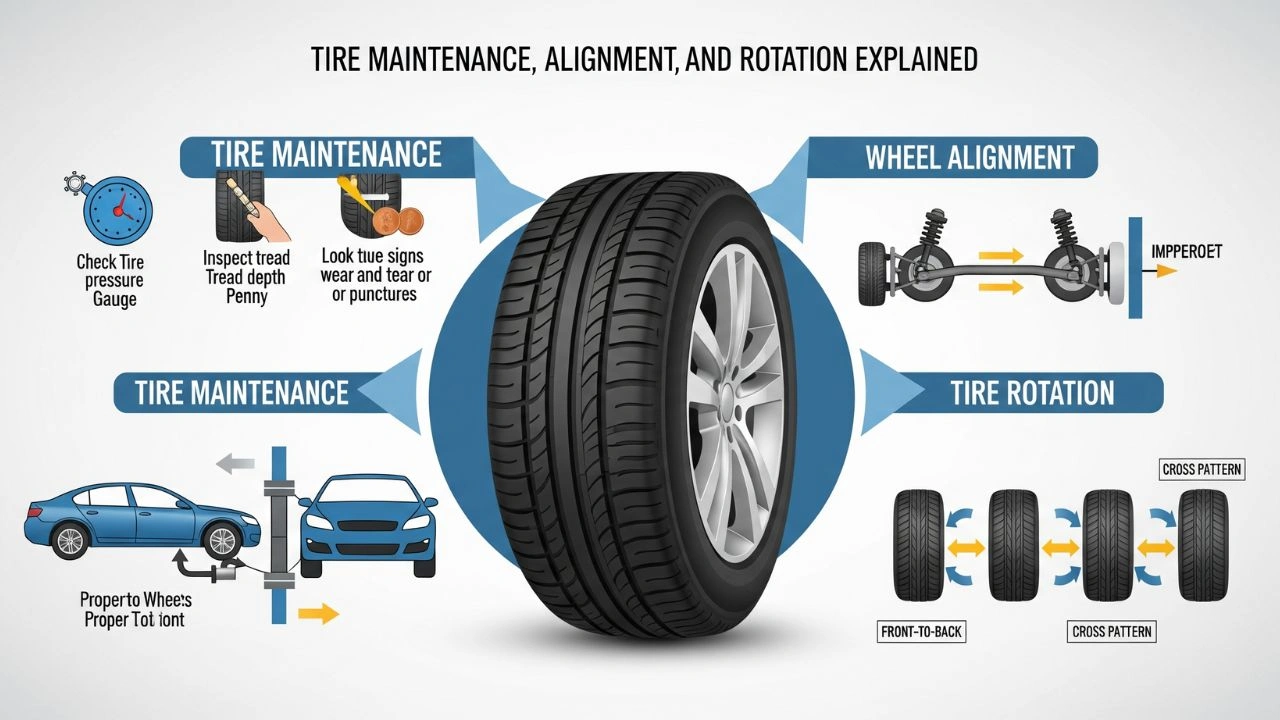
Tire Care Guide: Tires are the only part of your vehicle that directly touches the road, yet they are often one of the most neglected components when it comes to routine maintenance. Proper tire care is not just about extending tire life—it directly affects vehicle safety, fuel efficiency, ride comfort, and overall driving performance. Understanding tire maintenance, alignment, and rotation empowers drivers to make informed decisions that prevent costly repairs and reduce the risk of accidents.
This in-depth guide explains everything you need to know about tire maintenance, wheel alignment, and tire rotation, why they matter, how they work, and how to recognize warning signs before problems escalate.
Understanding the Importance of Tire Maintenance
Tire maintenance refers to the regular inspection and care practices that keep tires operating safely and efficiently. These practices include checking tire pressure, inspecting tread depth, monitoring wear patterns, and ensuring proper balance and alignment.
Well-maintained tires provide optimal traction, braking performance, and handling, especially in adverse weather conditions. Neglected tires, on the other hand, increase stopping distance, reduce steering control, and raise the risk of blowouts.
Modern vehicles are engineered with precise tolerances, and tires play a key role in maintaining those standards. Poor tire condition can also negatively affect suspension components, steering systems, and even fuel consumption.
Read Also: Mahindra Thar E: India’s Most Iconic Off-Road SUV Goes Electric
Tire Pressure: The Foundation of Tire Health
Maintaining correct tire pressure is one of the simplest yet most critical aspects of tire care. Underinflated or overinflated tires can cause serious problems.
Underinflated tires increase rolling resistance, causing the engine to work harder and burn more fuel. They also generate excess heat, which accelerates tire wear and raises the risk of failure. Over time, underinflation can damage tire sidewalls beyond repair.
Overinflated tires, on the other hand, reduce the tire’s contact patch with the road. This leads to uneven center tread wear, reduced traction, and a harsher ride. Overinflation can also make tires more susceptible to impact damage from potholes or curbs.
Drivers should check tire pressure at least once a month and before long trips, using a reliable gauge. Always follow the vehicle manufacturer’s recommended pressure, typically found on the driver’s door jamb—not the number printed on the tire itself.
Tread Depth and Why It Matters
Tire tread depth determines how effectively a tire can grip the road, especially on wet or slippery surfaces. As tread wears down, a tire’s ability to channel water away decreases, increasing the risk of hydroplaning.
Legal minimum tread depth in many regions is 2/32 of an inch, but safety experts recommend replacing tires well before reaching this limit. At around 4/32 of an inch, wet-weather performance begins to decline significantly.
A simple tread test involves inserting a coin into the tread grooves. However, modern tires often include tread wear indicators—small raised bars that become visible when the tire is nearing the end of its usable life.
Common Tire Wear Patterns and What They Mean
Uneven tire wear is a valuable diagnostic tool that reveals underlying mechanical or maintenance issues.
- Center wear usually indicates overinflation.
- Edge or shoulder wear is commonly caused by underinflation.
- Cupping or scalloping may point to suspension problems or unbalanced tires.
- Feathering, where tread edges feel sharp in one direction, often signals alignment issues.
Identifying these patterns early can prevent premature tire replacement and protect other vehicle components from damage.
What Is Wheel Alignment?
Wheel alignment refers to adjusting the angles of the wheels so they are positioned correctly relative to the vehicle and the road. Proper alignment ensures that tires make optimal contact with the surface, promoting even wear and predictable handling.
Alignment is defined by three primary angles:
- Camber: the inward or outward tilt of the wheel when viewed from the front.
- Caster: the angle of the steering axis when viewed from the side.
- Toe: the direction the tires point relative to the vehicle’s centerline.
Each angle plays a role in stability, steering response, and tire wear. Even slight misalignment can cause noticeable handling issues and rapid tire deterioration.
Signs Your Vehicle Needs a Wheel Alignment
Misalignment often develops gradually, making it easy to overlook until damage is done. Common warning signs include:
- Vehicle pulling to one side while driving straight
- Uneven or rapid tire wear
- Steering wheel not centered when driving straight
- Steering that feels loose or overly stiff
- Reduced straight-line stability
Alignment issues can result from everyday driving conditions such as potholes, curb impacts, or rough roads. Regular inspections help detect problems early.
Why Proper Alignment Is Essential
Correct wheel alignment improves more than just tire life. It enhances steering precision, improves fuel efficiency, and increases overall driving comfort. Misaligned wheels create drag, forcing the engine to work harder and increasing fuel consumption.
From a safety standpoint, alignment ensures predictable handling during emergency maneuvers. Vehicles with poor alignment may respond unpredictably during braking or cornering, increasing accident risk.
Manufacturers design suspension systems to operate within specific alignment parameters. Deviations from these specifications can compromise the effectiveness of advanced driver assistance systems (ADAS), such as lane-keeping and stability control.
Tire Rotation Explained
Tire rotation involves periodically changing the position of each tire on the vehicle to promote even wear. Because tires wear differently depending on their position, rotation helps balance this wear over time.
Front tires typically wear faster on front-wheel-drive vehicles due to steering and braking forces. Rear-wheel-drive and all-wheel-drive vehicles experience different wear patterns but still benefit significantly from regular rotation.
Routine tire rotation extends tire lifespan and maintains consistent handling characteristics throughout the life of the tires.
Common Tire Rotation Patterns
The correct rotation pattern depends on drivetrain type and tire design:
- Front-to-rear rotation: Common for vehicles with same-size tires and directional tread.
- Cross rotation: Used for non-directional tires, swapping front tires to opposite rear positions.
- Rearward cross: Often recommended for rear-wheel-drive vehicles.
- Side-to-side rotation: Used for directional tires mounted on same-width wheels.
Following the manufacturer’s recommended pattern ensures optimal results and prevents damage to directional or asymmetrical tires.
How Often Should Tires Be Rotated?
Most experts recommend rotating tires every 5,000 to 8,000 miles, or at each oil change. However, driving habits, road conditions, and vehicle type may require more frequent rotation.
Failing to rotate tires leads to uneven wear, reduced traction, and shorter tire life. Consistent rotation schedules are one of the most cost-effective tire maintenance practices available.
The Relationship Between Alignment and Tire Rotation
Tire rotation and alignment work together but serve different purposes. Rotation balances wear, while alignment corrects the angles that cause uneven wear in the first place.
Rotating tires without addressing alignment issues may temporarily mask symptoms, but the underlying problem will persist. Conversely, performing an alignment without rotating worn tires may limit the benefits.
For best results, alignment should be checked regularly, and tires should be rotated on schedule to maximize safety and longevity.
Tire Balancing and Its Role in Maintenance
While often confused with alignment, tire balancing addresses weight distribution around the wheel and tire assembly. Unbalanced tires cause vibrations, uneven wear, and stress on suspension components.
Balancing is typically performed when new tires are installed or when vibration is noticed at certain speeds. Properly balanced tires ensure smooth operation and protect both tires and vehicle systems.
Seasonal Tire Maintenance Considerations
Seasonal changes place different demands on tires. Hot weather increases tire pressure, while cold weather causes pressure to drop. Drivers should adjust pressure accordingly and check it more frequently during seasonal transitions.
Winter driving may require specialized tires designed for cold temperatures and snow. All-season tires are a compromise and may not provide optimal performance in extreme conditions.
Before long trips or seasonal changes, inspecting tread, pressure, and alignment can prevent unexpected problems.
Fuel Efficiency and Tire Care
Tire condition has a direct impact on fuel economy. Underinflated tires increase rolling resistance, reducing miles per gallon. Misalignment and uneven wear further compound inefficiency.
Studies show that proper tire maintenance can improve fuel efficiency by several percentage points over time. This translates into real savings at the pump and reduced environmental impact.
Safety Implications of Neglected Tires
Neglecting tire maintenance compromises safety in multiple ways. Worn or improperly inflated tires increase stopping distance, reduce cornering grip, and elevate the risk of blowouts.
At highway speeds, tire failure can lead to loss of control with severe consequences. Proper alignment and rotation ensure consistent performance across all four tires, providing balanced handling and stability.
Tire care is not optional—it is a fundamental aspect of responsible vehicle ownership.
When to Replace Tires Instead of Maintaining Them
Maintenance has limits. Tires should be replaced when tread depth reaches unsafe levels, when sidewall damage is present, or when tires are excessively aged—typically six to ten years regardless of tread.
Cracks, bulges, or repeated air loss indicate structural failure. No amount of rotation or alignment can correct these issues safely.
Knowing when maintenance ends and replacement begins is crucial for avoiding dangerous situations.
Read Also: Hyundai Prime SD 2025: A New Affordable Sedan Redefining Value, Comfort, and Trust in India
Professional Tire Services vs. DIY Maintenance
While drivers can handle basic tasks such as pressure checks and visual inspections, professional services offer precision and expertise. Alignment, balancing, and advanced diagnostics require specialized equipment.
Combining professional tire services with regular DIY checks provides the highest level of safety and performance. Many service centers bundle rotation and alignment checks with routine maintenance, making preventive care more accessible.
The Long-Term Benefits of Proper Tire Care
Consistent tire maintenance, proper alignment, and timely rotation deliver long-term benefits beyond immediate performance. These practices reduce overall vehicle wear, lower operating costs, and enhance resale value.
Drivers who prioritize tire care experience fewer breakdowns, better fuel economy, and increased confidence on the road. Over time, these advantages far outweigh the modest investment in regular maintenance.
Conclusion: Mastering Tire Maintenance for Safer Driving
Tire maintenance, alignment, and rotation are interconnected practices that play a vital role in vehicle safety and efficiency. Ignoring any one of these elements can undermine the others, leading to uneven wear, poor handling, and increased risk.
By understanding how tires work and committing to regular care, drivers can extend tire life, improve fuel efficiency, and ensure safer journeys in all conditions. Tire care is not merely a technical requirement—it is a proactive commitment to safety, performance, and peace of mind.
1 thought on “Tire Maintenance, Alignment, and Rotation Explained | Complete Tire Care Guide”