The Critical Role of a Car Battery in Modern Vehicles
Car Battery Maintenance and Replacement Warning Signs: A car battery is far more than a simple power source. It is the heart of a vehicle’s electrical system, responsible for supplying the initial energy needed to start the engine and supporting multiple electronic components during operation. From ignition systems and fuel injection to infotainment displays and safety sensors, nearly every modern automotive function depends on a reliable battery.
In older vehicles, the battery’s primary role was starting the engine. Today, however, vehicles are equipped with complex computer systems that remain active even when the engine is off. This constant demand means batteries are under more stress than ever before. Without proper maintenance, battery life can shorten dramatically, sometimes failing without warning.
Environmental conditions, driving habits, and vehicle technology all influence battery performance. Short trips, extreme temperatures, and infrequent use can significantly reduce efficiency. Understanding these factors is the first step toward effective battery care.
How Long Does a Car Battery Typically Last?
Most car batteries are designed to last between three and five years under normal conditions. However, this lifespan is not guaranteed and can vary depending on several factors. Climate plays a major role, with extreme heat accelerating chemical reactions inside the battery that lead to internal degradation.
Cold weather, while less damaging long-term, often exposes weak batteries. Engines require more power to start in low temperatures, and aging batteries may struggle to meet this demand. Additionally, driving patterns matter. Vehicles driven infrequently or only for short distances may not give the battery enough time to recharge fully.
Advancements in battery technology have improved durability, but increased electrical demands from modern vehicles counterbalance these gains. As a result, routine inspection and preventive maintenance remain essential for maximizing battery life.
Read Also: Hyundai Inster: A Compact Electric SUV Designed for the Next Generation
Common Causes of Car Battery Failure
Understanding why batteries fail can help drivers avoid premature replacement. One of the most common causes is parasitic drain, which occurs when electrical components continue drawing power while the vehicle is off. Interior lights, malfunctioning sensors, or aftermarket accessories can slowly deplete a battery overnight.
Another frequent issue is corrosion at the battery terminals. Over time, chemical reactions create a buildup of residue that interferes with electrical flow. Even a healthy battery can fail if corrosion prevents proper connection.
Vibration damage is also a concern. If a battery is not securely mounted, constant movement can damage internal plates, reducing capacity. Additionally, alternator problems may lead to undercharging or overcharging, both of which can significantly shorten battery life.
Early Warning Signs of a Weak Car Battery
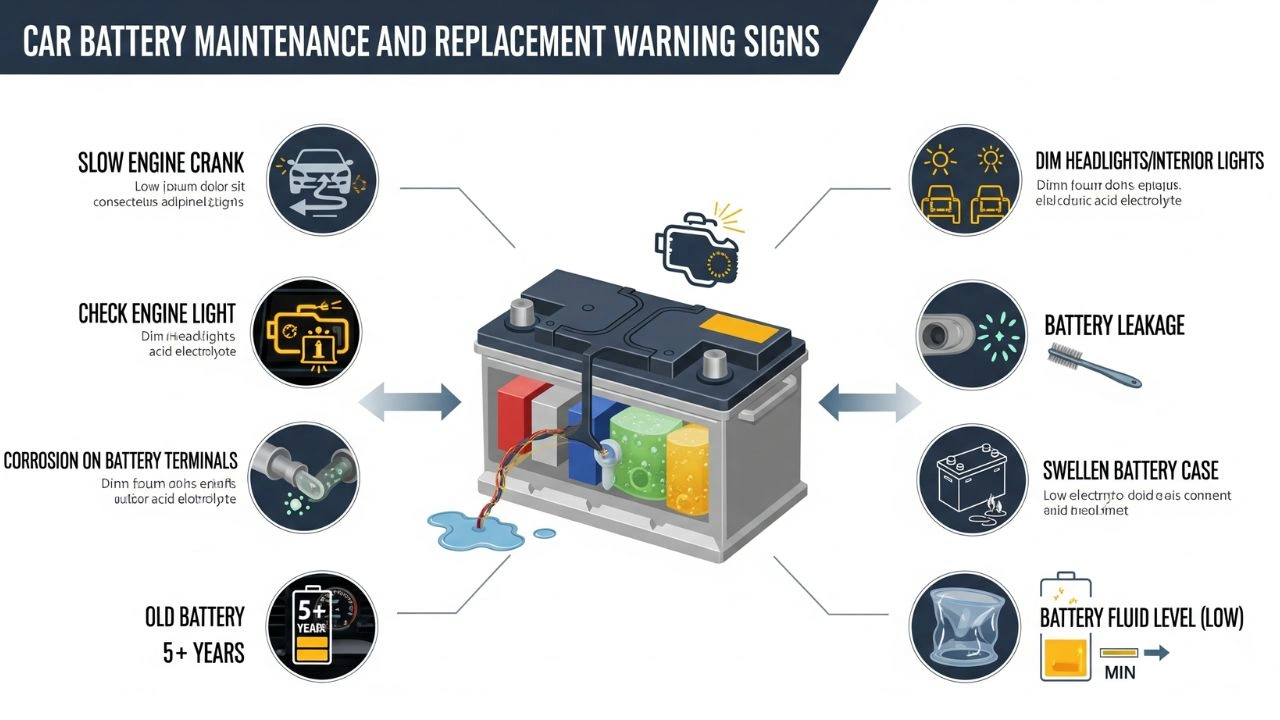
Recognizing early symptoms of battery trouble allows drivers to address issues before complete failure occurs. One of the most noticeable signs is slow engine cranking. When turning the key or pressing the start button, the engine may take longer than usual to start.
Dimming headlights and interior lights are another indicator. Fluctuating brightness often suggests insufficient electrical supply, especially noticeable at idle. Modern vehicles may also display dashboard warning lights related to the battery or charging system.
Electrical malfunctions, such as power windows operating slowly or infotainment systems resetting unexpectedly, can also signal battery weakness. These issues often appear gradually, providing valuable warning if drivers pay attention.
Advanced Warning Signs That Require Immediate Attention
While early symptoms may develop slowly, some warning signs indicate an urgent need for battery inspection or replacement. A clicking sound when attempting to start the vehicle is a classic sign of insufficient power. In some cases, the engine may not start at all.
Swelling or bloating of the battery case is another serious concern. This often results from excessive heat or overcharging and indicates internal damage. A swollen battery is a safety risk and should be replaced immediately.
A strong sulfur or “rotten egg” smell may signal a leaking battery. This odor comes from hydrogen sulfide gas, which is not only unpleasant but potentially dangerous. Any visible leaks, cracks, or unusual smells warrant immediate professional evaluation.
The Importance of Regular Battery Maintenance
Routine maintenance can significantly extend battery life and improve reliability. Regularly inspecting terminals for corrosion and cleaning them with appropriate solutions helps maintain strong electrical connections. Simple maintenance tasks can prevent many common battery-related issues.
Checking battery voltage during routine vehicle service provides insight into overall health. Many automotive service centers offer free battery testing, which can identify declining performance before failure occurs.
Ensuring the battery is securely mounted also reduces vibration damage. Drivers should periodically check that the battery hold-down bracket is tight and intact, especially after driving on rough roads.
How Driving Habits Affect Battery Health
Daily driving behavior plays a crucial role in battery longevity. Frequent short trips prevent the battery from fully recharging, as the alternator requires time to replenish energy used during startup. Over time, this leads to gradual discharge and reduced capacity.
Leaving the vehicle unused for extended periods can also cause battery drain. Even when parked, modern vehicles draw power for security systems and onboard electronics. Using a battery maintainer during long periods of inactivity can prevent discharge-related damage.
Aggressive use of electrical features while the engine is off, such as listening to the radio or charging devices, further strains the battery. Developing mindful habits can significantly improve long-term performance.
Seasonal Challenges and Their Impact on Batteries
Seasonal changes present unique challenges for car batteries. Summer heat accelerates chemical reactions inside the battery, leading to faster internal wear. High temperatures can cause fluid evaporation, reducing capacity and increasing the risk of failure.
Winter conditions, on the other hand, increase the demand placed on the battery. Cold engines require more power to start, and reduced chemical activity inside the battery limits output. Many battery failures occur during winter due to pre-existing weakness exposed by cold weather.
Preparing for seasonal extremes through testing and preventive replacement can help drivers avoid unexpected breakdowns. Proactive care is especially important in regions with significant temperature fluctuations.
When to Replace a Car Battery
Determining the right time to replace a battery involves considering age, performance, and warning signs. Even if a battery appears functional, replacement may be wise after four to five years, particularly in demanding climates.
Frequent jump-starts are a strong indicator that replacement is overdue. While jump-starting can provide temporary relief, repeated reliance on this method often signals irreversible battery deterioration.
Professional testing can assess cold cranking amps and reserve capacity, providing objective data to support replacement decisions. Replacing a battery before complete failure reduces the risk of being stranded and protects sensitive electronic systems.
Choosing the Right Replacement Battery
Selecting the correct battery involves more than matching physical size. Battery specifications such as cold cranking amps (CCA) and reserve capacity must meet or exceed manufacturer recommendations. Using an underpowered battery can strain the charging system and reduce reliability.
Advancements in battery technology offer options such as absorbed glass mat (AGM) batteries, which provide improved performance and durability. AGM batteries are particularly beneficial for vehicles with start-stop systems and high electrical demand.
Consulting the vehicle owner’s manual or a trusted automotive professional ensures compatibility. Investing in a quality battery often results in better performance and longer service life.
Environmental Considerations and Battery Recycling
Car batteries contain hazardous materials, including lead and sulfuric acid, making proper disposal essential. Fortunately, automotive batteries are among the most recycled consumer products. Recycling conserves resources and prevents environmental contamination.
Most retailers and service centers accept used batteries for recycling, often offering a core credit toward the purchase of a new one. Responsible recycling protects the environment and supports sustainable automotive practices.
Drivers should never dispose of batteries in household waste. Proper handling and recycling are both environmentally responsible and legally required in many regions.
The Cost of Neglecting Battery Maintenance
Ignoring battery health can lead to unexpected expenses beyond the cost of replacement. A failing battery can strain the alternator, leading to costly repairs. Electrical system malfunctions may also occur, affecting onboard computers and sensors.
Breakdowns caused by battery failure often result in towing expenses and lost time. Preventive maintenance is significantly more cost-effective than emergency repairs.
In extreme cases, battery failure can compromise safety systems, including power steering and braking assistance. Maintaining battery health is therefore not only a matter of convenience but also of safety.
Read Also: Audi A5 2026: Premium Design, Performance, and Technology Redefined for the Next Generation
Professional Inspections Versus DIY Battery Care
While many maintenance tasks can be performed by drivers, professional inspections offer added assurance. Automotive technicians use specialized equipment to test battery performance under load, providing more accurate assessments than visual inspection alone.
DIY care, such as cleaning terminals and monitoring warning signs, remains valuable. Combining professional evaluation with attentive self-care offers the best protection against battery-related issues.
Drivers should feel confident seeking expert advice when uncertain. Regular inspections during routine service appointments can prevent unexpected failures.
Future Trends in Automotive Battery Technology
The automotive industry continues to evolve, with innovations aimed at improving battery performance and sustainability. Enhanced materials, smarter charging systems, and improved energy management are extending battery life and reliability.
As electric and hybrid vehicles become more common, battery technology advancements influence even traditional combustion vehicles. Future batteries are expected to offer greater efficiency, resilience, and environmental benefits.
Staying informed about these developments helps drivers make better maintenance and replacement decisions in an increasingly technology-driven automotive landscape.
1 thought on “Car Battery Maintenance and Replacement Warning Signs | Complete Driver Guide”