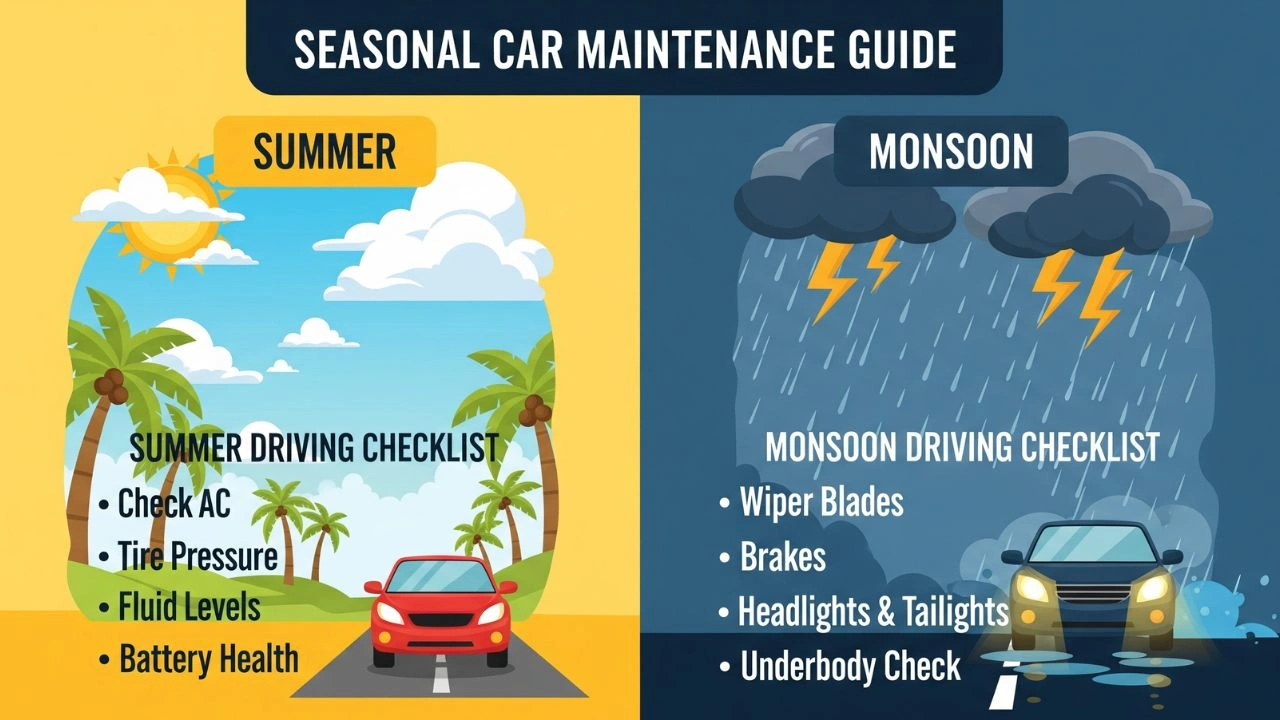
Seasonal Car Maintenance Guide: A complete, practical guide to protecting your car during extreme summer heat and challenging monsoon conditions year-round.
Seasonal changes have a powerful impact on your car’s performance, safety, and long-term reliability. In countries with intense summers and unpredictable monsoon seasons, vehicles are exposed to extreme heat, humidity, water, mud, and fluctuating road conditions. Without proper seasonal care, even a well-maintained car can suffer breakdowns, reduced fuel efficiency, and expensive repairs.
This in-depth guide explains seasonal car maintenance for summer and monsoon, focusing on preventive care that keeps your vehicle safe, efficient, and dependable. Whether you drive daily or occasionally, following these maintenance habits can save you money and prevent roadside emergencies.
Why Seasonal Car Maintenance Is Essential
Cars are engineered to operate within specific temperature and environmental limits. Extreme weather pushes components beyond their comfort zone, accelerating wear and tear.
Seasonal maintenance helps you:
- Prevent sudden breakdowns
- Improve fuel efficiency
- Extend component lifespan
- Enhance safety during adverse conditions
- Reduce long-term repair costs
Ignoring seasonal preparation often leads to problems that appear suddenly but develop slowly over time.
Read Also: Car AC Maintenance for Better Cooling and Efficiency | Complete Guide
Understanding Summer Stress on Your Car
Summer heat affects almost every part of a vehicle. Prolonged exposure to high temperatures causes fluids to evaporate faster, rubber components to harden, and batteries to weaken.
Key summer-related risks include:
- Engine overheating
- Reduced battery performance
- Tire blowouts
- Air conditioning failure
- Increased fuel consumption
Proper summer maintenance focuses on cooling, lubrication, and heat resistance.
Summer Engine Cooling System Maintenance
The cooling system is the most critical component during summer. A single failure can cause severe engine damage.
What to check:
- Coolant level and quality
- Radiator condition
- Hoses for cracks or leaks
- Cooling fan operation
Never drive with low coolant, as overheating can warp engine components and damage gaskets. Coolant should be replaced according to the manufacturer’s schedule to maintain its heat-transfer efficiency.
Engine Oil and Fluids for Summer
High temperatures thin engine oil, reducing its ability to lubricate moving parts.
Summer fluid care includes:
- Using the correct oil viscosity
- Checking oil levels frequently
- Inspecting transmission fluid
- Monitoring brake fluid condition
Fresh, correct-grade oil reduces friction and heat buildup, improving engine efficiency in hot weather.
Air Conditioning System Inspection
An efficient air conditioning system is not just about comfort—it also helps prevent driver fatigue.
Summer AC maintenance includes:
- Checking refrigerant levels
- Cleaning cabin air filters
- Inspecting AC belts and hoses
- Ensuring condenser cleanliness
A poorly functioning AC system forces the engine to work harder, increasing fuel consumption.
Battery Care During Hot Weather
Contrary to popular belief, heat damages car batteries more than cold. High temperatures accelerate internal chemical reactions, leading to premature battery failure.
Battery maintenance tips:
- Clean corrosion from terminals
- Ensure secure mounting
- Test battery health regularly
A weak battery can leave you stranded even in perfect driving conditions.
Tire Maintenance for Summer Roads
Hot asphalt increases tire pressure and accelerates wear.
Summer tire care includes:
- Maintaining correct tire pressure
- Inspecting tread depth
- Checking for sidewall cracks
- Avoiding overloading
Overinflated or worn tires are more likely to burst during summer, especially at highway speeds.
Preparing Your Car for the Monsoon Season
Monsoon driving introduces entirely different challenges: waterlogged roads, poor visibility, slippery surfaces, and increased electrical risks.
Monsoon maintenance focuses on:
- Water resistance
- Traction and braking efficiency
- Visibility
- Electrical system protection
Preparing before the rains begin is far more effective than reacting during a breakdown.
Tire and Wheel Care for Monsoon Safety
Tires are your first line of defense against wet roads. Poor tread depth dramatically increases the risk of hydroplaning.
Monsoon tire checks include:
- Ensuring adequate tread depth
- Replacing worn tires
- Checking wheel alignment
- Inspecting for uneven wear
Good tires significantly reduce braking distance on wet roads, improving overall safety.
Brake System Maintenance for Rainy Conditions
Brakes are heavily stressed during monsoon driving due to water, mud, and frequent braking.
Brake maintenance includes:
- Inspecting brake pads and discs
- Checking brake fluid levels
- Cleaning mud and debris from components
Delayed brake response in wet conditions can be extremely dangerous.
Windshield, Wipers, and Visibility
Clear visibility is critical during heavy rain.
Monsoon visibility maintenance includes:
- Replacing worn wiper blades
- Checking washer fluid levels
- Treating windshield with water-repellent solutions
Worn wipers can reduce visibility to near zero during heavy rainfall, increasing accident risk.
Electrical System Protection in Monsoon
Water and electronics do not mix well. Moisture intrusion can cause short circuits and sensor failures.
Electrical precautions include:
- Sealing exposed wiring
- Checking battery terminals
- Avoiding waterlogged roads
After driving through water, it is important to inspect electrical components for moisture buildup.
Underbody and Rust Protection
Monsoon moisture accelerates rust formation, especially on the underbody.
Preventive steps include:
- Underbody anti-rust coating
- Regular washing to remove mud and salt
- Drying hidden areas thoroughly
Rust damage often goes unnoticed until it becomes severe and expensive to repair.
Cabin Care During Monsoon
Humidity encourages mold and unpleasant odors inside the car.
Cabin maintenance includes:
- Keeping interiors dry
- Cleaning floor mats regularly
- Using moisture absorbers
A dry cabin prevents health issues and maintains interior quality.
Driving Habits That Support Seasonal Maintenance
Maintenance alone is not enough—how you drive also matters.
Seasonal driving tips:
- Avoid aggressive acceleration in summer
- Reduce speed on wet roads
- Avoid sudden braking during rain
- Do not drive through deep water
Gentle driving reduces stress on mechanical and electrical systems.
Post-Monsoon Inspection Checklist
Once the monsoon season ends, a thorough inspection ensures no hidden damage remains.
Post-monsoon checks include:
- Brake system inspection
- Electrical diagnostics
- Suspension and alignment check
- Underbody inspection
Early detection prevents long-term damage caused by moisture exposure.
Long-Term Benefits of Seasonal Maintenance
Following seasonal maintenance routines delivers long-term rewards:
- Lower repair costs
- Improved fuel efficiency
- Enhanced safety
- Longer vehicle lifespan
- Higher resale value
Seasonal care is not optional—it is essential for vehicle longevity.
Read Also: Tata Sierra EV: A Legendary Name Reimagined for India’s Electric Future
Conclusion: Seasonal Care Is Smart Ownership
Seasonal Car Maintenance Guide: Summer heat and monsoon rains are unavoidable, but vehicle damage is not. By understanding how weather affects your car and taking preventive steps, you can enjoy reliable performance throughout the year.
Seasonal car maintenance is an investment, not an expense. It protects your vehicle, your wallet, and most importantly, your safety. Make seasonal checks a habit, and your car will reward you with smooth, trouble-free driving—no matter the weather.
2 thoughts on “Seasonal Car Maintenance Guide for Summer and Monsoon Driving”