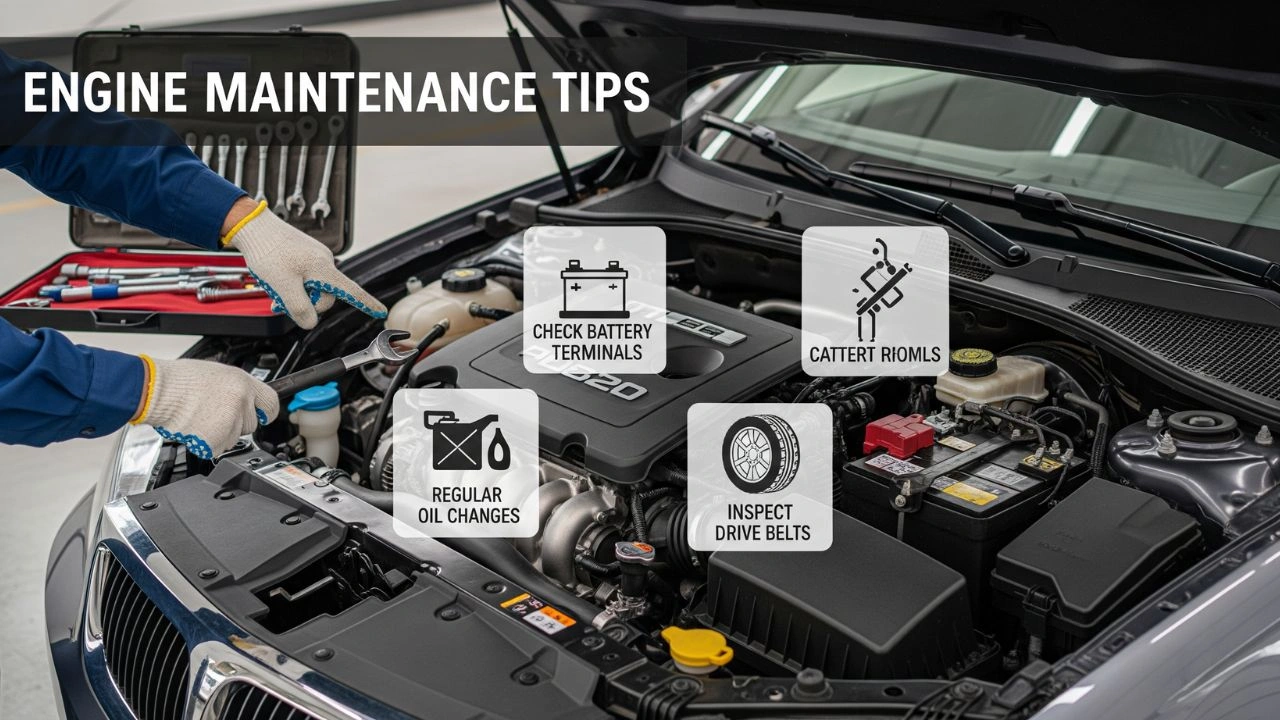
Engine Maintenance Tips: Smart, routine engine care habits that save money, improve performance, extend lifespan, and prevent unexpected breakdowns long-term.
Regular engine maintenance is not just about keeping a vehicle running—it is about protecting one of the most expensive and complex systems in your car. Many drivers only pay attention to their engines when something goes wrong, but by then, repair bills can be overwhelming. The good news is that most major engine failures are preventable with simple, consistent maintenance practices.
This article explains proven engine maintenance tips that help prevent costly repairs, increase reliability, and ensure long-term efficiency. Whether you drive daily or occasionally, following these strategies can save thousands in repair costs while keeping your vehicle in peak condition.
Why Engine Maintenance Matters More Than Ever
Modern engines are engineering marvels, combining precision parts, electronics, sensors, and software. While they deliver better power and fuel efficiency than ever before, they are also less forgiving of neglect.
When basic maintenance is skipped, small issues snowball into severe failures such as overheating, oil starvation, warped cylinders, or complete engine seizure. Preventive care is always cheaper than corrective repairs, and consistent maintenance ensures safety, performance, and resale value.
Read Also: Mahindra Global Pik Up 2026: India’s Most Ambitious Lifestyle Pickup Truck Goes Truly Global
Regular Oil Changes: The Lifeline of Your Engine
Engine oil performs multiple vital roles: lubrication, cooling, cleaning, and corrosion prevention. Over time, oil breaks down, becomes contaminated, and loses effectiveness.
Skipping oil changes is one of the fastest ways to destroy an engine.
Fresh oil ensures:
- Reduced friction between moving parts
- Proper heat dissipation
- Removal of microscopic metal particles
- Protection against rust and sludge buildup
Following the manufacturer-recommended oil change interval—based on mileage, time, and driving conditions—is essential. Vehicles driven in heavy traffic, dusty environments, or extreme temperatures often require more frequent oil changes.
Monitoring Oil Levels Between Services
Changing oil alone is not enough. Engines naturally consume small amounts of oil, and leaks can develop without warning.
Driving with low oil levels leads to metal-on-metal contact, causing accelerated wear of pistons, bearings, and camshafts. Checking the oil level at least once a month takes less than two minutes and can prevent catastrophic damage.
A consistent drop in oil level may indicate:
- Internal engine wear
- Valve seal failure
- External oil leaks
Addressing these early keeps repair costs minimal.
Cooling System Care Prevents Overheating Disasters
An overheated engine can suffer warped cylinder heads, blown head gaskets, or cracked blocks—some of the most expensive repairs possible.
The cooling system works continuously to regulate engine temperature. Neglecting it can be disastrous.
Key cooling system maintenance includes:
- Checking coolant levels regularly
- Replacing coolant at recommended intervals
- Inspecting hoses for cracks or swelling
- Ensuring the radiator and fans operate correctly
Never ignore temperature warning lights, as even a short overheating episode can cause long-term damage.
Air Filter Maintenance Improves Engine Longevity
The engine air filter prevents dust, dirt, and debris from entering the combustion chamber. A clogged air filter restricts airflow, forcing the engine to work harder and burn more fuel.
Clean airflow equals efficient combustion.
Benefits of a clean air filter include:
- Improved fuel economy
- Better throttle response
- Reduced engine wear
- Lower emissions
Replacing the air filter is inexpensive and often overlooked, yet it plays a crucial role in engine health.
Fuel System Maintenance Prevents Power Loss
Modern fuel systems operate at high pressures and require clean fuel for optimal performance. Dirty injectors or contaminated fuel lines reduce efficiency and increase engine stress.
Fuel system care involves:
- Using high-quality fuel from trusted stations
- Replacing the fuel filter on schedule
- Periodic fuel injector cleaning
A neglected fuel system leads to rough idling, misfires, and long-term engine strain.
Spark Plug and Ignition System Care
Spark plugs ignite the air-fuel mixture inside the engine. Worn or fouled plugs cause misfires, reduced power, and increased fuel consumption.
Regular inspection and timely replacement of spark plugs ensure:
- Smooth engine operation
- Consistent combustion
- Reduced stress on ignition coils
- Improved fuel efficiency
Ignoring ignition issues can damage catalytic converters and lead to expensive exhaust repairs.
Paying Attention to Warning Lights Early
Dashboard warning lights exist for a reason. Many drivers ignore them until performance declines significantly.
A small sensor alert today can prevent a major engine failure tomorrow.
Common engine-related warnings include:
- Check engine light
- Oil pressure warning
- Coolant temperature alert
Modern diagnostics allow technicians to identify problems early, often before mechanical damage occurs.
Keeping the Engine Clean Inside and Out
Engine cleanliness is not just cosmetic. Dirt buildup can hide leaks, damage electrical connectors, and trap heat.
Internal cleanliness matters too. Sludge buildup from infrequent oil changes restricts oil flow and accelerates wear.
Preventive steps include:
- Regular oil changes with correct-grade oil
- Occasional engine bay cleaning
- Prompt repair of oil or coolant leaks
A clean engine runs cooler, smoother, and lasts longer.
Proper Driving Habits Reduce Engine Stress
How you drive directly affects engine health. Aggressive driving, excessive idling, and constant short trips can shorten engine lifespan.
Healthy driving habits include:
- Allowing the engine to warm up before hard acceleration
- Avoiding high RPMs when the engine is cold
- Minimizing unnecessary idling
- Driving smoothly and predictably
Gentle operation significantly reduces internal engine wear over time.
Timing Belt or Chain Maintenance Is Non-Negotiable
The timing belt or chain synchronizes engine components. Failure can result in bent valves, damaged pistons, and total engine destruction.
Timing belts must be replaced at manufacturer-specified intervals, while timing chains require periodic inspection.
Ignoring timing system maintenance is one of the most expensive mistakes vehicle owners make.
Regular Professional Inspections Catch Hidden Problems
Even with good self-care, some issues require trained eyes and diagnostic tools.
Professional inspections help identify:
- Minor oil leaks
- Cooling system inefficiencies
- Sensor malfunctions
- Early signs of internal wear
Annual inspections are far cheaper than major engine repairs and provide peace of mind.
Using the Correct Fluids Always Matters
Engines are designed for specific oil viscosities, coolant types, and fuel grades. Using incorrect fluids reduces efficiency and accelerates wear.
Always follow manufacturer recommendations, as modern engines are highly sensitive to fluid specifications.
Storage and Infrequent Use Require Special Care
Vehicles that sit unused for long periods face different engine risks, including oil breakdown, corrosion, and dry seals.
Preventive measures include:
- Periodic engine startup
- Maintaining proper oil levels
- Using fuel stabilizers if needed
Even low-mileage vehicles need regular maintenance to prevent internal deterioration.
Read Also: MG Hector 2026: The Connected SUV That Continues to Redefine Comfort, Technology, and Value in India
Long-Term Benefits of Consistent Engine Maintenance
Consistent engine maintenance offers long-term rewards:
- Lower repair costs
- Better fuel efficiency
- Improved resale value
- Greater reliability
- Reduced environmental impact
Preventive care transforms vehicle ownership from reactive repairs to proactive savings.
Conclusion: Prevention Is Always Cheaper Than Repair
Engines are designed to last hundreds of thousands of miles—but only if properly maintained. Most costly engine failures do not happen suddenly; they develop slowly through neglect.
By following these engine maintenance tips, you protect your investment, enhance driving safety, and avoid financial surprises. Routine care is not an expense—it is insurance against major repairs.
1 thought on “Engine Maintenance Tips That Prevent Costly Repairs and Engine Failure”