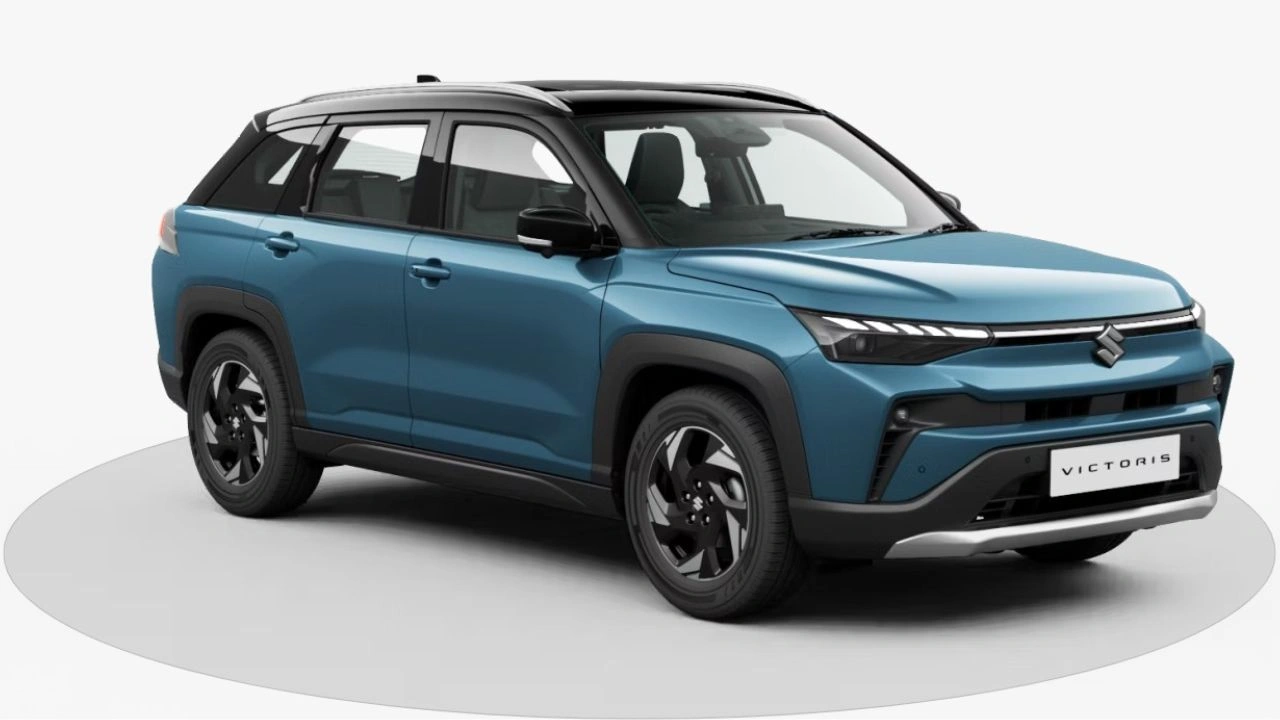
Maruti Victoris: India strengthens its position as a global automotive hub as Maruti Suzuki starts overseas shipments of its newest midsize SUV.
Maruti Suzuki has taken another decisive step in expanding India’s automotive footprint on the global stage with the commencement of exports of the Maruti Victoris, its newly introduced midsize SUV. The move reinforces the company’s long-term vision of positioning India not just as a manufacturing base for domestic consumption, but as a key export hub for global markets.
The first batch of Victoris SUVs has already left Indian shores, marking a significant milestone for Maruti Suzuki and the Indian automobile industry at large. This development comes at a time when global demand for reliable, fuel-efficient, and value-driven SUVs is on the rise, particularly in emerging markets.
A Strategic Export Milestone for Maruti Suzuki
The export of the Victoris is not a routine shipment—it is a strategic statement. Maruti Suzuki has historically been India’s largest passenger vehicle exporter, and the addition of the Victoris to its export portfolio highlights the company’s confidence in the product’s global appeal.
The initial export consignment consists of over 450 units, shipped from Gujarat’s Mundra and Pipavav ports, two of India’s most advanced maritime gateways. These ports have become critical to India’s automotive export ecosystem due to their efficiency, scale, and connectivity to global trade routes.
By starting exports so soon after the vehicle’s domestic debut, Maruti Suzuki signals that the Victoris has been designed from the outset with international standards and customer expectations in mind.
Read Also: Mahindra BE 07 2026: The Electric SUV That Signals Mahindra’s Boldest Leap Into the Future
Made in India, Built for the World
One of the most notable aspects of the Victoris export program is that the SUV is manufactured entirely in India. This aligns seamlessly with the government’s “Make in India, Make for the World” initiative, which encourages domestic manufacturing with a global outlook.
Maruti Suzuki’s production facilities have steadily evolved to meet stringent global quality norms, and the Victoris benefits from this maturity. From build quality and safety engineering to emissions compliance and durability testing, the SUV has been developed to meet the diverse requirements of overseas markets.
This export initiative not only boosts Maruti Suzuki’s global presence but also enhances India’s reputation as a trusted automotive manufacturing destination.
Rebranded for Global Markets
In international markets, the Victoris will not carry the Maruti badge. Instead, it will be sold under the Suzuki brand, reflecting the company’s global branding strategy.
In several regions, the SUV will be marketed as the Suzuki Across, a name chosen to resonate with global audiences and align with Suzuki’s international naming conventions. This rebranding allows the vehicle to seamlessly integrate into Suzuki’s worldwide lineup while maintaining its Indian engineering roots.
Despite the change in name, the core product remains largely unchanged, ensuring consistency in quality, performance, and reliability.
Target Markets: Emerging Economies in Focus
Maruti Suzuki’s export strategy for the Victoris is clearly focused on emerging and developing markets, where demand for midsize SUVs continues to grow steadily.
Key target regions include:
- Africa
- Latin America
- The Middle East
- Select Asian markets
These regions share common buyer preferences: robust vehicles, affordable ownership costs, good fuel efficiency, and proven reliability. The Victoris fits squarely into this demand profile, making it a logical addition to Suzuki’s export lineup.
Over time, Maruti Suzuki plans to expand exports to more than 100 countries, further strengthening its global reach.
Powertrain Options Designed for Versatility
One of the reasons the Victoris is well-suited for global markets is its flexible and proven powertrain lineup.
The SUV is powered by a 1.5-litre naturally aspirated petrol engine, delivering around 103 horsepower and 139 Nm of torque. This engine has been widely used across Maruti Suzuki and Suzuki models and is known for its durability, smooth performance, and low maintenance costs.
Transmission options include:
- A 5-speed manual gearbox for markets that prioritize driver engagement and lower purchase costs
- A 6-speed automatic transmission for regions where convenience and ease of driving are key buying factors
In addition to the standard petrol version, certain international markets may also receive a strong hybrid variant. This hybrid setup combines a petrol engine with electric assistance and an e-CVT gearbox, offering improved fuel efficiency and lower emissions.
Why Hybrids Matter for Export Markets
The inclusion of hybrid powertrains is particularly significant for global exports. Many countries are tightening emissions norms while still lacking widespread EV charging infrastructure. Hybrid vehicles offer a practical transition solution, balancing environmental concerns with real-world usability.
By offering hybrid variants of the Victoris in select markets, Suzuki positions itself as a brand that understands regional regulatory pressures and evolving consumer expectations.
This approach also enhances the Victoris’s competitiveness against rival SUVs from Japanese, Korean, and Chinese manufacturers.
Design That Appeals Across Cultures
Design plays a crucial role in a vehicle’s global success, and the Victoris has been styled with international tastes in mind.
The SUV features:
- A bold front fascia with a wide grille
- Strong shoulder lines that give it a muscular stance
- A balanced profile that avoids overly aggressive or polarizing design cues
This neutral yet confident design language ensures that the Victoris appeals to a wide audience, from urban families to fleet buyers, across different cultures and markets.
Interior design also follows a similar philosophy, emphasizing practicality, comfort, and durability over flashy but impractical elements.
Safety and Compliance with Global Standards
For any vehicle intended for export, safety compliance is non-negotiable. The Victoris is engineered to meet multiple international safety regulations, depending on the destination market.
Key safety features include:
- Multiple airbags
- ABS with EBD
- Electronic stability control
- Rear parking sensors and cameras (market-dependent)
By offering a solid safety package as standard, Suzuki ensures that the Victoris can be homologated efficiently across different regions without extensive re-engineering.
Strengthening India’s Export Leadership
Maruti Suzuki’s export numbers have been consistently strong over the years. In 2025 alone, the company exported approximately 3.9 lakh vehicles, retaining its position as India’s largest passenger vehicle exporter.
The addition of the Victoris to the export lineup is expected to further boost these figures. Unlike smaller hatchbacks, midsize SUVs command higher value per unit, improving overall export revenue and profitability.
This shift toward exporting higher-segment vehicles reflects the maturing capabilities of India’s automotive manufacturing ecosystem.
Economic and Employment Impact
Large-scale vehicle exports have a ripple effect across the economy. Increased production for overseas markets leads to:
- Higher factory utilization
- Increased demand for auto components
- More logistics and port activity
- Additional employment across the supply chain
The Victoris export program thus contributes not just to Maruti Suzuki’s growth, but also to regional economic development, particularly in states like Gujarat where manufacturing and port operations are concentrated.
Competition in Global Markets
The Victoris will face stiff competition internationally from:
- Japanese rivals like Toyota and Honda
- Korean manufacturers such as Hyundai and Kia
- Aggressive Chinese SUV brands offering feature-rich products
However, Suzuki’s strong brand equity, reputation for reliability, and competitive pricing give the Victoris a solid foundation to succeed.
In many emerging markets, Suzuki already enjoys high brand trust, which could significantly ease the Victoris’s market entry.
A Long-Term Global Vision
The start of Victoris exports is not a short-term experiment—it is part of Maruti Suzuki’s long-term global strategy. The company has been gradually transitioning from exporting entry-level cars to more sophisticated, higher-margin vehicles.
This evolution mirrors India’s own journey from a low-cost manufacturing base to a globally respected automotive exporter.
As global supply chains diversify and manufacturers seek reliable production hubs, India—and companies like Maruti Suzuki—are well positioned to play a larger role.
Read Also: Car AC Maintenance for Better Cooling and Efficiency | Complete Guide
What This Means for Indian Consumers
Interestingly, strong export demand can also benefit Indian buyers. Higher production volumes often lead to:
- Improved quality control
- Faster technology adoption
- Better economies of scale
In the long run, the success of the Victoris overseas could influence future updates, feature additions, and even new model development for the domestic market.
Conclusion: A Proud Moment for Indian Manufacturing
The commencement of Maruti Victoris exports marks a significant chapter in India’s automotive story. It showcases how vehicles engineered and built in India are now capable of competing on the global stage—not just on price, but on quality, reliability, and relevance.
For Maruti Suzuki, the Victoris represents confidence in its product philosophy. For India, it symbolizes the country’s growing stature as a global automotive powerhouse.
As shipments increase and new markets open up, the Victoris could well become one of the most visible ambassadors of Indian-made mobility solutions worldwide.