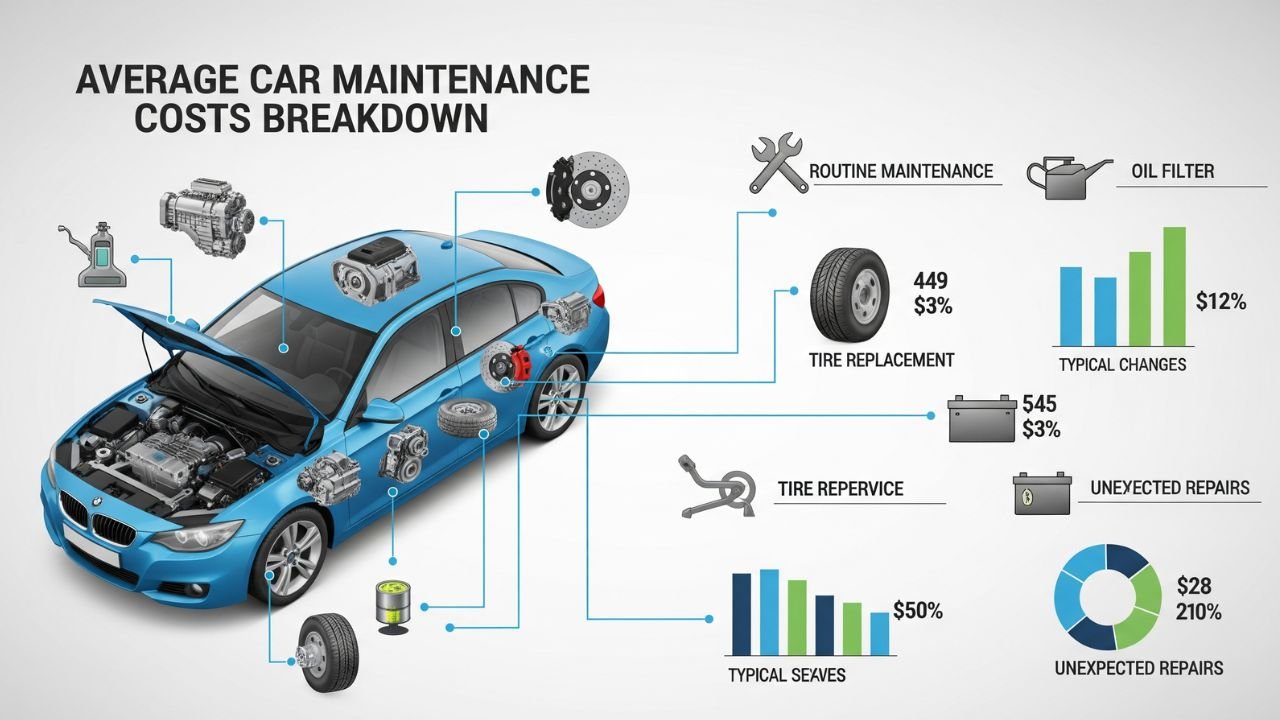
Car Maintenance Costs Breakdown: Owning a car offers freedom, comfort, and convenience—but it also comes with ongoing financial responsibilities that many buyers underestimate. While the purchase price gets the most attention, car maintenance costs over the years often decide whether ownership feels affordable or stressful.
From routine servicing and wear-and-tear parts to unexpected repairs and annual renewals, understanding how car maintenance expenses work is essential. This comprehensive guide explains the complete car maintenance costs breakdown and helps you plan a realistic annual budget—so you stay prepared, avoid sudden expenses, and make smarter ownership decisions.
Whether you drive a petrol, diesel, hybrid, or electric car, this article is designed to solve real problems, reduce confusion, and help you manage your money better.
Why Car Maintenance Costs Matter More Than You Think
Many first-time buyers focus only on EMI or upfront price. But the true cost of ownership is revealed over time.
Car maintenance costs matter because:
- They are recurring, not one-time
- Small neglects turn into expensive repairs
- Poor budgeting leads to financial stress
- Well-maintained cars last longer and retain value
A planned maintenance budget can save thousands over a car’s lifetime.
Read Also: Mahindra BE 6 Electric SUV: Range, Charging, Variants & Real-Life Buying Guide
Understanding the Two Types of Car Maintenance Costs
Before breaking down expenses, it’s important to understand the two broad categories.
1. Scheduled (Routine) Maintenance
These are predictable and recurring:
- Periodic servicing
- Oil changes
- Filter replacements
- Brake inspections
- Fluid top-ups
2. Unscheduled (Unexpected) Maintenance
These occur due to:
- Wear and tear
- Accidents or damage
- Component failure
- Neglect or delayed servicing
Smart planning accounts for both—not just routine service bills.
Detailed Breakdown of Car Maintenance Costs
Let’s look at each cost component individually so you know where your money goes.
1. Periodic Servicing Costs
Periodic servicing is the backbone of car maintenance.
What It Includes
- Engine oil replacement
- Oil filter and air filter change
- General inspection
- Software checks (for modern cars)
- Cleaning and lubrication
Average Annual Cost
- Small cars: Low to moderate
- Mid-size cars: Moderate
- SUVs/luxury cars: Higher
Skipping regular service may save money short-term but increases long-term repair costs.
2. Engine Oil and Fluids
Engine oil is the lifeline of your car.
Common Fluids You Pay For
- Engine oil
- Coolant
- Brake fluid
- Transmission fluid
- Power steering fluid (if applicable)
Cost Impact
- Synthetic oils cost more but last longer
- Premium cars require higher-grade fluids
- EVs need fewer fluids, lowering costs
Using the right fluids protects expensive components.
3. Brake System Maintenance
Brakes are safety-critical and wear out naturally.
Brake-Related Expenses
- Brake pads (front and rear)
- Brake discs/rotors
- Brake fluid replacement
Cost Frequency
- Brake pads: Every 25,000–50,000 km
- Brake discs: Every 50,000–80,000 km
Driving style heavily affects brake maintenance costs.
4. Tyres: A Major Running Expense
Tyres are often the single most expensive consumable.
Factors Affecting Tyre Cost
- Tyre size and brand
- Road conditions
- Driving habits
- Wheel alignment and balancing
Replacement Cycle
- Every 40,000–60,000 km (average)
- Earlier if driven aggressively or on rough roads
Neglecting tyre care increases fuel usage and safety risks.
5. Battery Replacement
Every car—EV or ICE—depends on a battery.
Battery Types
- 12V starter battery (all cars)
- High-voltage traction battery (EVs)
Replacement Costs
- Starter battery: Moderate, every 3–5 years
- EV battery: Expensive but long-lasting (8–12 years typically)
Regular battery checks prevent sudden breakdowns.
6. Filters and Spark Plugs
Often overlooked, these small parts matter.
Common Replacements
- Air filter
- Cabin filter
- Fuel filter
- Spark plugs (petrol cars)
Cost Impact
- Low individually
- Add up over time if ignored
Clean filters improve performance and fuel efficiency.
7. Suspension and Steering Components
Suspension parts suffer on bad roads.
Typical Costs Include
- Shock absorbers
- Bushings
- Ball joints
- Steering components
Replacement Frequency
- Depends on road quality and driving style
- Usually after several years
Comfort and handling depend heavily on suspension health.
8. Clutch and Transmission (ICE Cars)
Manual and automatic transmissions have different cost profiles.
Manual Transmission
- Clutch replacement after heavy usage
- Moderate cost but labour-intensive
Automatic Transmission
- Higher service costs
- Fluid replacement critical
Smooth driving extends clutch and gearbox life significantly.
9. Insurance Renewal
Insurance isn’t optional—it’s a yearly expense.
Depends On Insurance Cost
- Car value
- Age of vehicle
- Claim history
- Coverage type
Annual Cost
- Reduces as car ages
- Increases after claims
Skipping adequate insurance can lead to massive financial losses.
10. Registration, Taxes, and Compliance
Annual or periodic regulatory costs include:
- Road tax (in some regions)
- Fitness certificates for older cars
- Emission checks
- Permit renewals (if applicable)
These costs are predictable and should be budgeted yearly.
Electric vs Petrol vs Diesel: Maintenance Cost Comparison
Petrol Cars
- Moderate servicing cost
- More frequent oil changes
- Cheaper upfront maintenance
Diesel Cars
- Higher service cost
- Expensive injectors and filters
- Better long-distance efficiency
Electric Cars
- Lowest routine maintenance
- No oil changes
- Fewer moving parts
- Higher long-term battery consideration
EVs win on maintenance simplicity but need long-term planning.
Annual Car Maintenance Budget Planning (Step-by-Step)
Now let’s put everything together.
Step 1: List Fixed Annual Costs
These occur every year:
- Insurance
- Periodic service
- Basic inspections
- Regulatory fees
These form your base annual budget.
Step 2: Estimate Wear-and-Tear Costs
Average out expenses like:
- Tyres
- Brakes
- Battery
- Filters
Divide total replacement cost by expected lifespan to get a yearly estimate.
Step 3: Create an Emergency Repair Fund
Unexpected repairs are inevitable.
Recommended Buffer
- 10–20% of your annual maintenance budget
This prevents financial shocks when repairs arise suddenly.
Step 4: Adjust for Driving Habits
Your costs change if you:
- Drive daily vs occasionally
- Use highways vs city roads
- Drive aggressively vs calmly
Honest self-assessment improves budget accuracy.
Step 5: Review and Update Annually
Costs change due to:
- Vehicle ageing
- Mileage increase
- Inflation
- Parts price changes
A yearly review keeps your budget realistic.
Common Mistakes That Increase Car Maintenance Costs
Avoid these costly habits:
- Skipping scheduled service
- Using low-quality parts
- Ignoring warning lights
- Delaying small repairs
- Poor tyre maintenance
Preventive care is always cheaper than repairs.
Smart Tips to Reduce Car Maintenance Costs
- Follow service schedule strictly
- Maintain correct tyre pressure
- Drive smoothly
- Use recommended fluids
- Compare service packages
- Keep service records
Small habits lead to big savings over time.
Read Also: MG Hector Plus Review 2026: 7-Seater SUV Space, Features, Mileage & Buying Guide
How Maintenance Impacts Resale Value
Well-maintained cars:
- Sell faster
- Command higher prices
- Attract serious buyers
Poorly maintained cars:
- Lose value quickly
- Raise buyer concerns
Maintenance is an investment, not an expense.
Who Benefits Most from Proper Budget Planning?
- First-time car owners
- Families managing monthly expenses
- Long-term car keepers
- Budget-conscious buyers
- EV adopters planning battery life
A planned owner enjoys the car more and worries less.
Conclusion: Take Control of Your Car Ownership Costs
Understanding car maintenance costs breakdown and annual budget planning transforms car ownership from stressful to manageable. Instead of reacting to bills, you become proactive, informed, and financially confident.
A car is not just something you buy—it’s something you maintain. And the better you plan, the longer it serves you reliably, safely, and affordably.
The smartest car owners are not those who spend the least—but those who plan the best.